Commonly Used Amateur Radio Frequencies
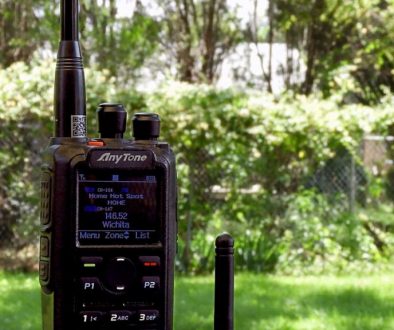
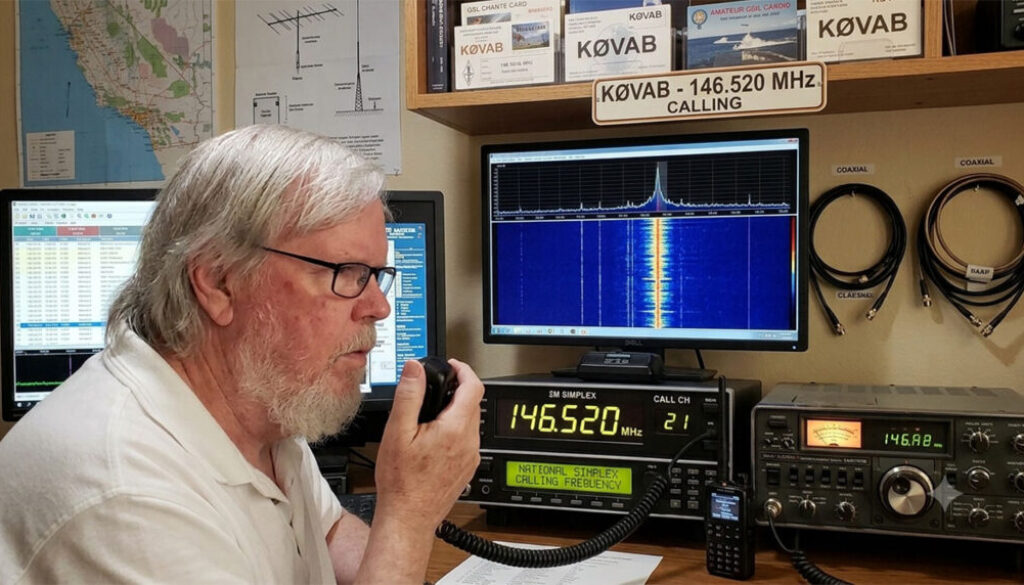
If you can remember only one frequency, make it 146.520 MHz — the national 2‑meter calling frequency. It’s easily the most active ham frequency, used day and night across the U.S. and many other countries for local contacts and general calling.
On UHF, the 70‑centimeter equivalent is 446.000 MHz, another busy calling frequency favored by portable and mobile operators.
HF SSB Voice Activity
For those who enjoy HF single‑sideband operation, here are several well‑known calling and activity frequencies:
| Band | Frequency (MHz) | Common Use |
|---|---|---|
| 20 m | 14.230 | Maritime mobile (“Sargasso”) activity |
| 40 m | 7.185 | General calling and ragchew |
| 10 m | 28.400 | Common USB voice frequency |
So, if someone new to the hobby asks, “What frequency is ham radio?” the simplest answer is: “The most used one is 146.520 MHz — the 2‑meter calling frequency.”
Calling Frequencies vs. Repeater Inputs
Calling frequencies are simplex channels—meaning stations transmit and receive on the same frequency. They’re used for initial contact or general calling between operators. Once contact is made, stations often move to another frequency to continue the conversation and free up the calling channel.
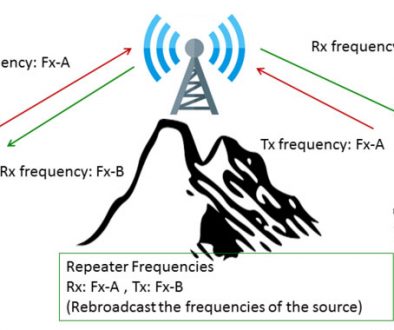
Repeater inputs, on the other hand, are part of a duplex system. A repeater listens on one frequency (the input) and retransmits on another (the output), extending range and improving clarity. Operators transmit on the repeater’s input frequency and listen on its output.

In short:
- Calling frequency → direct station‑to‑station contact (simplex)
- Repeater input/output → uses a relay station to boost communication (duplex)
Understanding the difference helps ensure proper operating etiquette and keeps the bands organized for everyone.
Repeaters are not limited to just our local area either. They are plentiful across the country. You’ll want to learn how to program your radio with repeater frequencies, offsets, and PL tones before your travel so you can reach out everywhere you go.
- RepeaterBook – This is a comprehensive repeater database compiled by the amateur radio community. Search the site and find repeaters in your area or the area you are traveling to.